Nighttime Curls: The Protocol
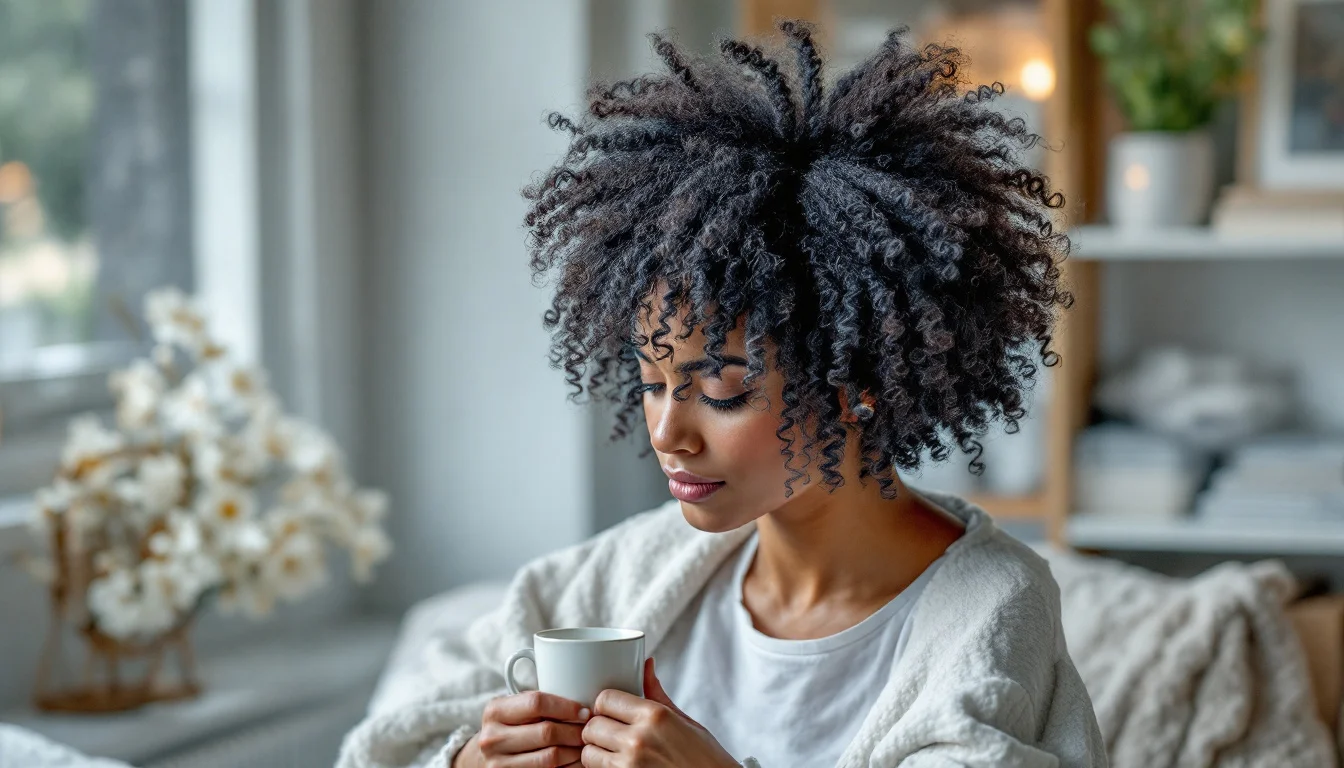
Waking up too often reveals a disorganized hair structure, plagued by frizz and a loss of definition. Preserving your curls isn't about piling on hair products in the morning. Long-lasting styling actually happens while you sleep. The trick is learning to anticipate the physical forces that act upon your hair overnight. By understanding and neutralizing the two main physical stressors on curls—textile friction and mechanical compression—you can protect your lengths. These simple steps are rooted in a true understanding of the hair fiber's vulnerability.
Key takeaways
- Structural vulnerability: The spiral shape, combined with other hair factors like porosity, tends to slow down the natural progression of sebum, making curls particularly sensitive to nighttime damage.
- Physical stressors: Compression under your body weight can cause curls to flatten. Friction against bedding, meanwhile, generates frizz and disrupts curl definition.
- Fabric choices: Swapping out abrasive cotton for the smooth slip of silk or satin is a highly recommended protective measure.
- Mechanical adaptation: There is a tying method suited for every hair texture to limit flattening without creating new tension.
- Morning minimalism: Proper overnight protection can, in many cases, streamline your morning routine down to a simple, light refresh.
The physics of the curl: Friction vs. compression
Curly hair features a specific architecture that dictates its needs. As noted by the Retail Box blog, curly hair is naturally prone to dryness. The reason is purely mechanical: sebum produced by the scalp travels much less easily down curved strands than it does on straight hair. This natural hydration struggles to reach the ends.
Exposure to nighttime elements
Deprived of this natural protection, textured hair fibers are even more exposed to harsh environments at night. Three main issues frequently plague curly hair during sleep: the onset of frizz caused by continuous rubbing, moisture loss, and the flattening of curls due to compression.The mechanics of compression
At night, your head exerts constant pressure against the bed. Sleeping directly on your curls can compress certain sections of your hair. Under this stress, the spiral of the curl can flatten out. The morning result is often an irregular, misshapen curl completely stripped of its natural volume. The goal, therefore, is to limit direct contact between your body weight and these delicate structures.The fabric choice: Alternatives to cotton
Your immediate sleep environment plays a major role in preserving your curls. While beloved for its comfort, cotton poses a real challenge for curly hair textures. The John Frieda brand blog points out that cotton pillowcases are simply too abrasive for fragile curls. Due to its woven texture, cotton catches the hair fiber and creates mechanical resistance with every toss and turn of your head.
The impact of abrasion
This constant rubbing damages the hair fiber and can disrupt your curl pattern while you sleep, paving the way for frizz.Slip as the solution
To counteract this problem, using silk or satin is highly recommended. These fabrics allow your strands to glide freely across the pillowcase, significantly reducing friction. By providing a smooth surface that moves with the natural motion of your head, silk or satin helps preserve the integrity of your curl pattern.Choosing a protective hairstyle
Managing the physical placement of your lengths helps minimize overnight flattening. The choice of a protective hairstyle, to be done every night, depends entirely on the length and nature of your hair. The golden rule common to all these methods is to avoid any excessive tension at the scalp.
Structural protection options
| Nighttime technique | Target curl type | Mechanical impact and direct benefit |
|---|---|---|
| The Pineapple | Medium to long hair | Reduces compression by gathering the lengths at the very top of the head with a soft satin scrunchie. |
| The loose bun | Long hair | Keeps the hair secured at the crown of the head, limiting both breakage and friction. |
| Two-strand twists | Tight curls and coily hair | Helps preserve the original curl pattern overnight. |
| Loose braids | Lengths prone to tangling | Protects against friction while keeping hair securely in place. |
To prevent flattening your lengths, it's best to keep them away from the weight of your head by guiding them upward. However, all ties must remain loose. A technical caveat is necessary here: a tight braid can leave your strands with an unwanted crimped effect when you wake up, completely altering the natural shape of your curls.
The moisture paradox: Can you sleep with wet hair?
Sleeping with wet hair requires careful management of capillary moisture. It is generally best to let curly hair dry completely before hitting the pillow. Prolonged pressure on soaking wet curls can alter their shape and significantly increase tangling. Damp hair is notorious for taking on awkward creases under the weight of your head.
The absorption compromise
If drying your hair before bed simply isn't an option, an absorption technique can be a lifesaver. "Plopping" is frequently recommended. This method, which should be done for 15 to 30 minutes rather than overnight, involves gently wrapping your curls in a soft cotton t-shirt to absorb excess moisture while keeping the curls perfectly coiled.Resolving the conflict
The primary danger comes from the pressure exerted on wet, unstructured fibers. Used temporarily right before bed, plopping helps pre-dry the hair by soaking up excess water. This prevents you from sleeping on soaking wet curls while also avoiding the prolonged friction of keeping a towel wrapped around your head all night.Morning: The art of a residue-free refresh
Using nighttime protection can seriously streamline your morning routine. Waking up often comes down to just a few quick adjustments. Protective habits—like wearing a bonnet, tying a silk scarf, or sleeping on a satin pillowcase—can be repeated night after night. However, when it comes to hair products, a light touch is key.
The rule of minimal intervention
Styling products should only be applied when your curls genuinely need hydration or definition. Depending on the product type and your hair's porosity, applying products systematically every day can eventually weigh your hair down. Mechanical nighttime protection naturally reduces friction and helps lock in moisture. As a result, your hair often retains the benefits of the treatments applied on wash day.Avoiding buildup
Leave-in styling products should be applied sparingly. The ultimate goal is to avoid residue accumulation, commonly known as product buildup. Slathering on excess product day after day just to mask flattened curls is strongly discouraged.Frequently Asked Questions (FAQ): Resting your curls
Why should I avoid tight braids when sleeping?
A tight braid creates unwanted tension and can disrupt the natural shape of your curls. When you wake up, your strands are likely to have a crimped, wavy effect that overrides your hair's original pattern. Because of this, it's highly recommended to keep your braids very loose.Is it worth layering multiple protective hair accessories?
Combining multiple methods (like a protective hairstyle covered by a bonnet, with a satin pillowcase underneath) provides a reliable failsafe. If your bonnet slips off or your hair tie comes loose as you toss and turn, the smooth surface of the pillowcase takes over to ensure uninterrupted slip.Does my protection method need to be the same every night of the week?
Your approach can absolutely remain flexible. The days immediately following wash day might require closer attention to preserving the curl's architecture, while the days right before your next wash can easily tolerate a much quicker, simpler updo.Conclusion: Think prevention over repair
Protecting textured hair requires a shift in your habits. By moving your focus away from the morning routine and toward your sleep environment, you are taking a proactive, preventative approach. This anti-friction protocol allows you to get ahead of nighttime physical stressors. Ultimately, you limit morning manipulation and actively encourage the preservation of your curls' natural, beautiful shape.