Evening Showers and Sleep: Why 1 to 2 Hours Before Bed is Best
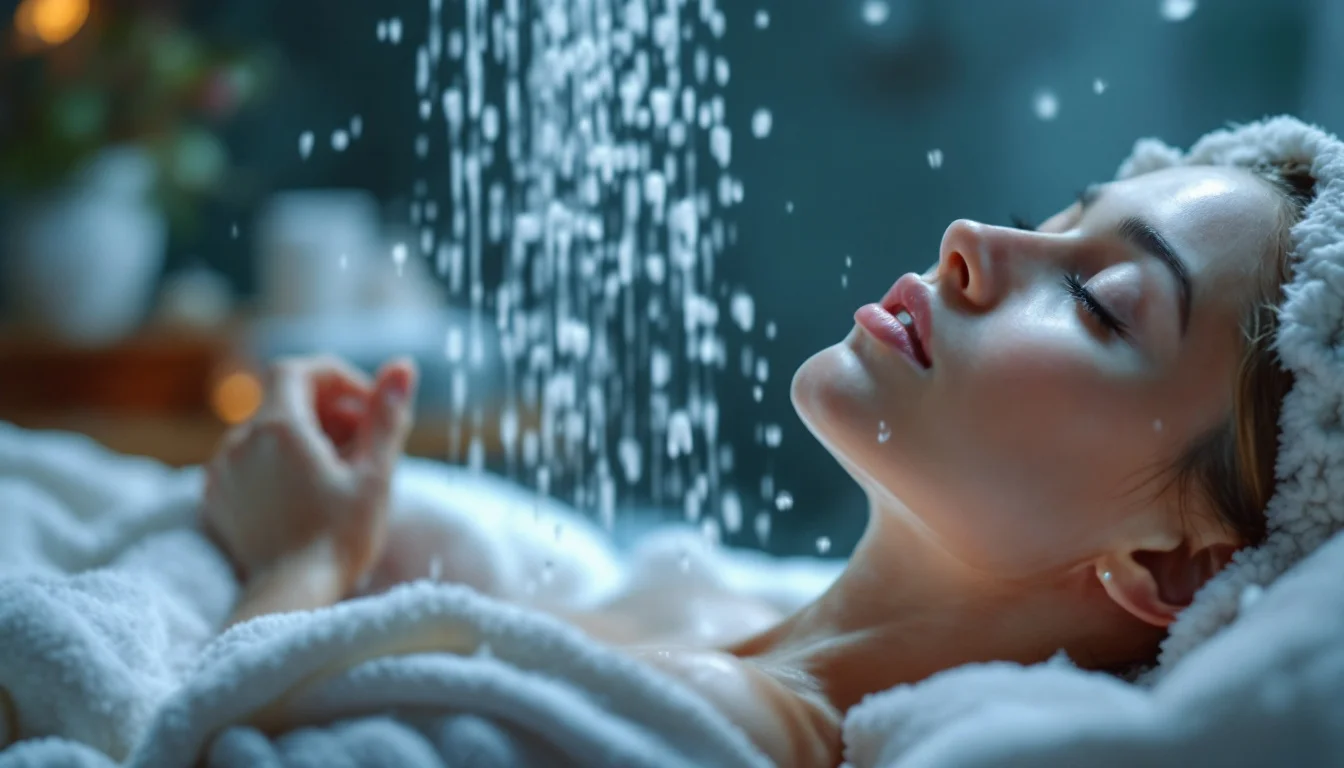
Why does the heat of a shower paradoxically help you fall asleep?
Key takeaways
- Optimal timing: Finish your routine 1 to 2 hours before going to bed.
- Ideal temperature: Aim for water heated between 40 and 42.5°C.
- Sufficient duration: 10 minutes is more than enough.
- The mistake to avoid: Never slip under the covers while you're still too hot.
As the day winds down and the light fades, the frantic pace of your obligations finally eases. You might slip into the bathroom seeking a moment of comfort, imagining that the warmth of the water will gently prepare you for sleep. Yet, the physiological mechanics operating beneath your skin are much more fascinating—and counterintuitive—than simply getting cozy and warm. Falling asleep doesn't require you to be warm; it demands precisely the opposite.
The role of the distal-proximal gradient
To understand this phenomenon, we must look at how our bodies regulate their own temperature as night approaches. According to sleep physiologists, rest is accompanied by a natural drop in core body temperature in the evening. Your system needs to dissipate the heat it has accumulated throughout the day.
To release this heat, the body dilates the blood vessels in the skin of your hands and feet. This is what physiologists sometimes call the distal-proximal gradient: a transfer of heat from your body's core to your extremities, which then act as tiny thermal radiators.
The secret of evaporation
This is where the famous thermal paradox comes into play. When you immerse yourself in hot water, you aren't just storing heat. According to scientific literature, hot water actively pushes blood toward the skin of your hands and feet.
The real magic happens the moment you step out of the water. As you exit the bath, this heat rapidly escapes into the ambient air, causing your core body temperature to drop lower and faster than it would have on its own.
The true benefit for your night's rest therefore comes from the cooling that follows the warming, not from the heat itself. Sleep experts point out that getting into bed immediately after a very hot bath is absolutely not the goal. If you slip under your covers while you're still burning up, you block this lifesaving evaporation. The key lies in the transition—in that suspended moment when heat leaves your body to signal to your brain that it is time to sleep.
Should you opt for a full bath or a quick shower in the evening?
While a long bath maximizes the drop in body temperature, a quick shower remains an effective alternative for inducing sleep.
While the thermal mechanism is now clear, putting it into practice often depends on how much time you have. Between an immersive bath that requires preparation and a quick shower that easily fits into a busy evening, the physiological effects present some interesting nuances. Science has looked into these rituals to evaluate their real impact on our ability to fall asleep.
| Criteria | Warm Evening Bath | Evening Shower | Morning Shower |
|---|---|---|---|
| Impact on falling asleep | Maximum thermal drop | Moderate but documented induction | Opposite effect: stimulating |
| Benefits and hygiene | Deep muscle relaxation | Hydration and allergen removal | Awakening and circulatory activation |
| Physiological constraints | Longer cooling time | Rapid body cooling | Unsuitable for falling asleep |
The superiority of a long bath
When it comes to maximizing the drop in core temperature, total immersion offers measurable results. An at-home study of 23 healthy adults compared three routines practiced 1.5 to 2 hours before bed (a shower alone, a short bath, and a long bath). It showed that participants fell asleep faster after the long bath than after the simple shower, and reported better sleep onset and quality. The determining factor appears to be the magnitude of the increase in body temperature: baths that raised sublingual temperature by about 0.9°C were effective, while those that only raised it by about 0.3°C were less so.
The shower: A clinically valid alternative
However, don't worry if your bathroom doesn't have a tub. The thermal effect also applies to stepping under the showerhead. Some preliminary studies conducted on small groups of athletes suggest that a warm shower of about 10 minutes at around 40°C before bed could help slightly reduce the time it takes to fall asleep and improve sleep efficiency.
This suggests that a shower remains a viable and effective alternative for triggering the thermal sleep signal, even after physical exertion.
The role of the morning shower
It is also crucial to distinguish your goals depending on the time of day. Specialist retailer Bathroom Mountain points out that morning showers stimulate wakefulness by activating blood circulation and the nervous system. Conversely, evening showers are associated with muscle relaxation and restorative cleanliness after the day's activities. The time you choose therefore dictates the biological function the water will have on your body.
What is the perfect timing for a shower before bed?
The ideal time to shower is 1 to 2 hours before going to bed, using water heated between 40 and 42.5°C.
The success of this thermal ritual relies on surprising chronological precision. Taking care of yourself requires a delicate touch, but also a good sense of timing. The water acts as a trigger, but the body needs time to perform its cooling routine. You must give your system the necessary window to shed the stored heat.
Optimal parameters
Research establishes clear guidelines for synchronizing your routine. The sleep benefits peak when the bath or shower ends 1 to 2 hours before bedtime. There's no need to spend the whole evening in the water: 10 minutes is more than enough to trigger the thermal signal.
Water temperature plays an equally fundamental role. A warm bath or shower (around 40 to 42.5°C) before bed is associated with better self-rated sleep quality as well as improved sleep efficiency, according to a meta-analysis by Haghayegh et al. (Sleep Medicine Reviews). It provides a comforting heat, but it should never be so hot that it agitates your skin.
The trap of excessive heat
It's tempting to think that if a little heat is beneficial, a lot of heat will be even better. This is a physiological error that could ruin your efforts. Hotter and longer isn't always better.
- Loss of effectiveness: In a Japanese observational study analyzing data from older adults equipped with sleep sensors, those who took a hot bath generally showed better sleep efficiency and spent less time awake at night. They were also less likely to rate their sleep as poor quality (results adjusted for various sociodemographic and environmental factors). This is an observational study: it establishes a statistical link, not proof of causality. Furthermore, this same study indicates that the benefit on sleep efficiency decreased when a longer bath was combined with hotter water.
- Blocked cooling: Scalding water raises your core temperature to such a degree that the cooling window is no longer sufficient to dissipate the heat.
- The bedding mistake: If you immediately wrap yourself in a thick duvet after getting out of water that was too hot, you block the evaporation process, thereby delaying sleep onset.
What are the effects of an evening shower on your skin and bedding?
Beyond sleep, showering in the evening purifies your nighttime environment and can optimize skin hydration.
Beyond the pure mechanics of sleep, taking this time for yourself in the evening boasts aesthetic and protective benefits. Nighttime is when your skin barrier regenerates, and setting the right stage is essential for maximizing these benefits.
The ideal time for skincare
Optimizing this moment involves using the cooling period dictated by your biological clock to perfect your beauty routine. Since you have a buffer before going to bed, your skin, still warm and slightly damp, offers favorable permeability.
According to general dermatological recommendations, evening showers can benefit dry or sensitive skin by allowing moisturizers to penetrate overnight. Applying a moisturizer right after your evening shower on still-damp skin locks in hydration, all without any immediate exposure to the sun or outdoor pollutants.
A purified sleep environment
The impact of this ritual extends right down to the fibers of your sheets. Lying down in bed with clean skin radically changes the quality of your nighttime environment.
An evening shower keeps your bedding cleaner by effectively removing sweat, natural oils, and allergens accumulated throughout the day before you go to sleep. This preventive practice can be especially beneficial for:
- Allergy sufferers, by washing away residual pollen.
- Acne-prone skin, by preventing the transfer of sebum onto pillowcases.
- Sensitive respiratory systems that need clean, unpolluted nighttime air.
What are the alternatives and precautions if you can't take a full bath?
Foot baths offer a gentle but less clinically proven alternative, while certain medical precautions are necessary when dealing with heat.
Sometimes a hot bath or prolonged shower just isn't suited to your situation, whether for medical reasons or a simple lack of comfort. The art of the evening routine also lies in its flexibility and in practicing it safely.
The case for foot baths
Highly popular on social media as a gentle alternative to trigger vasodilation in the extremities without getting your whole body wet, foot baths are subject to measured scientific scrutiny.
Reviews of the scientific literature on foot baths point out that available studies often rely on small samples of low methodological quality, with overall results that struggle to demonstrate statistically significant effectiveness. A small winter study of 9 women did note, however, that foot baths, like full baths, shortened sleep onset time compared to no treatment—although the full bath raised core temperature by about 1°C, whereas the foot bath did not. While relaxing, this method does not appear to offer the same sleep-inducing power as a full-body immersion.
Medical precautions and safety
Applying heat to the body is not without risks and requires some common sense. Several essential precautions will help ensure your routine remains beneficial:
- Absolutely avoid hot baths after consuming alcohol, as it impairs thermoregulation capabilities and alters blood pressure.
- Be particularly cautious if you have a heart condition or hypotension, since heat affects blood pressure.
- Keep the water warm but not scalding to protect your epidermis.
- Be very careful when standing up in the bathtub to avoid orthostatic dizziness (head rushes).
- For frail older adults or those prone to dizziness, a shower with a seat or a foot bath is a safer option.
Frequently asked questions about the evening thermal routine (FAQ)
What should you do with your hair during an evening shower?
Managing wet hair can be tricky. While applying moisturizers to your body after a shower locks in hydration, sleeping with a completely soaked scalp can be uncomfortable and disrupt your thermoregulation. It is advisable to dry at least your roots during the cooling down period before going to bed.
Is the thermal routine effective enough for chronic insomniacs?
Although manipulating core body temperature is a documented physiological tool for inducing drowsiness, sleep hygiene experts regularly point out that for severe chronic insomnia, cognitive behavioral therapy for insomnia (CBT-I) remains the first line of treatment. Furthermore, there is a lack of large randomized trials conducted on people diagnosed with insomnia. A warm bath acts as an excellent relaxation supplement, but it does not replace specialized care.
How can you personalize your routine?
In conclusion, incorporating hot water into your evening should, above all, remain a moment of relaxation. The drop in your body temperature naturally promotes sleep, provided you adjust the duration and temperature of your shower to your own comfort and physiological sensitivities.
--- The information contained in this article does not replace medical advice. Consult your doctor or a qualified healthcare professional.